Private Jet Meals: What You Can Really Expect at 40,000 Feet
Private jet meals explained. Discover what you can eat onboard, how catering works, costs, menus, and luxury inflight dining options.
SkyDine Team
4/8/20266 min read


Private jet meals are not just about food. They are part of a larger experience built around privacy, personalization, and precision.
Unlike commercial flights, where meals are standardized and limited, private aviation allows passengers to request exactly what they want, when they want it. From simple comfort food to multi course fine dining, the possibilities are nearly endless.
This guide breaks down everything you need to know about private jet meals, including what is typically served, how it is prepared, and what makes it different from traditional inflight dining.
What Are Private Jet Meals
Private jet meals are fully customized inflight dining experiences prepared specifically for individual flights. Meals are typically arranged through specialized aviation caterers who understand the operational constraints of private aircraft. Every dish is designed to travel well, be easy to serve onboard, and maintain quality at altitude. Passengers can request anything from a quick snack to a full dining experience with multiple courses.
What Kind of Food Is Served on Private Jets
There is no fixed menu in private aviation and that is precisely the point. What gets served on a private jet is whatever the passenger wants, within the bounds of what the departure location, the aircraft, and the timeline can support.
In practice that covers an enormous range. Breakfast services might include fresh eggs prepared to order, pastries sourced from a specific bakery, and seasonal fruit. Lighter daytime flights often call for well constructed salads, sandwiches, or cold mezze style spreads that travel well and do not require reheating. Evening flights and longer trips tend toward more substantial service, steak, fresh seafood, pasta dishes, or cuisine tailored specifically to the passenger's cultural background or personal preference.
Desserts and curated snack selections are a standard part of most full service arrangements, and for passengers with specific tastes it is not unusual to have items sourced directly from a named restaurant or specialty supplier.
What makes private jet catering genuinely different is that the brief starts with the passenger and works backward from there. At Skydine we do not present a menu and ask passengers to choose from it. We find out what they want and we build around that.
Can You Order Anything on a Private Jet?
In short, yes. Private jet catering is built around the passenger, not a set menu. That level of flexibility is one of the things that separates private aviation from everything else, and it is something Skydine works around every single day.
Passengers regularly request dishes from their favorite local restaurants, regional and cultural cuisine specific to their background or destination, strict dietary requirements including vegan, halal, gluten free, and allergen controlled meals, and last minute changes right up to departure. The only real limits are timing, the destination, and what the aircraft can store and serve. A light jet with no galley has different constraints than a G650 with a full kitchen setup. A good catering partner knows how to work within both.
How Private Jet Meals Are Prepared
This is one of the most common misconceptions about private aviation. Food on a private jet is not cooked in the air. It is prepared on the ground by specialist caterers, packaged for transport, and delivered to the aircraft before departure.
The process starts with menu planning around the passenger preference sheet. From there, ingredients are sourced, restaurant orders are placed if needed, and everything is packaged specifically for the flight so it can be reheated or plated by the corporate flight attendant onboard. Timing the delivery to align with the departure schedule is one of the more demanding parts of the job, particularly on short notice trips.
What happens once the food is onboard depends entirely on the aircraft and the crew. On a larger jet a skilled CFA can produce a genuinely impressive multi-course service. On a smaller aircraft the focus shifts to clean presentation and smart menu choices that hold up well in transit.Why Food Tastes Different at Altitude
At high altitude, taste perception changes. Cabin pressure and dry air can reduce sensitivity to salt and sweetness. This is why private jet meals are carefully designed to maintain flavor even in flight.
Experienced caterers adjust seasoning and ingredient balance to ensure the food still tastes refined and complete.
How Much Do Private Jet Meals Cost
Private jet catering costs vary more than most people expect, and that is largely because the request itself drives the price. A simple cold spread for two passengers on a short hop is a very different proposition to a full multi-course dinner service for ten on a transatlantic flight.
As a general guide, crew meals typically run between $30 and $50 per person, while passenger catering tends to sit between $95 and $150 per head depending on the complexity of the request and the number of courses expected. A single course working lunch looks very different on an invoice to a four course dinner with premium ingredients sourced to a specific brief.
The other factors that influence what you will pay are the type of cuisine being requested, where the aircraft is departing from and how complex it is to source specific ingredients in that location, and how much notice the caterer has been given. Last minute requests are absolutely possible in private aviation but they do carry a premium.
What is worth understanding about private aviation is that the conversation rarely starts with budget. It starts with what the passenger wants. The job of a good catering partner is to deliver that as efficiently as possible, and Skydine is built around exactly that kind of service.
What Makes Private Jet Meals Different
The honest answer is almost everything. Private jet catering and commercial airline food are solving completely different problems.
Commercial airline catering is a logistics operation. Thousands of identical meals produced in advance, loaded onto aircraft, and served to passengers who had no input into what they were eating. The goal is consistency at scale.
Private jet catering is the opposite. Every meal is built around a specific passenger, their preferences, their dietary requirements, and often the nature of the trip itself. The ingredients are sourced fresh, the presentation is handled with genuine care, and the corporate flight attendant delivering the service knows exactly who they are serving and what matters to them. That level of personalization is not incidental to the experience. It is the entire point of it.
Challenges of Serving Meals on a Private Jet
Private aviation sets a high bar for food service, and meeting that bar comes with some real operational challenges that anyone working in this space learns quickly.
Galley space on most private jets is limited. Even on larger aircraft the working area is a fraction of what a restaurant kitchen offers, which means every element of the meal needs to be thought through in advance. Dishes that require extensive last minute assembly or are structurally delicate under movement are a risk that experienced CFAs learn to manage or avoid.
Timing is another constant pressure. On short flights in particular the window between wheels up and descent can be surprisingly narrow. Getting a full service out cleanly in that window requires the kind of preparation that starts well before boarding.
Turbulence is a factor that never goes away entirely. A well composed dish on the ground can look very different after encountering unexpected movement in the air. Thoughtful menu choices and smart plating techniques go a long way toward managing that, but it is a reality of the environment that distinguishes in-flight dining from any other kind of food service.
The Role of Private Jet Catering Companies
A specialist private jet catering company does a lot more than prepare food. The role covers the entire process from the moment a trip is confirmed to the moment the meal is on the table at altitude.
For Skydine that means working directly with crew and operators to understand exactly what is needed, sourcing the right ingredients or restaurant items for the specific request, designing menus with inflight conditions in mind so that what arrives on the plate reflects what was planned on the ground, and coordinating delivery to the aircraft with the kind of precision that departure schedules demand. A late catering delivery is not just an inconvenience in private aviation. It can hold an aircraft.
The goal is to make the experience feel effortless for the passenger and straightforward for the crew. That requires a level of coordination and industry knowledge that a general catering company simply cannot replicate.
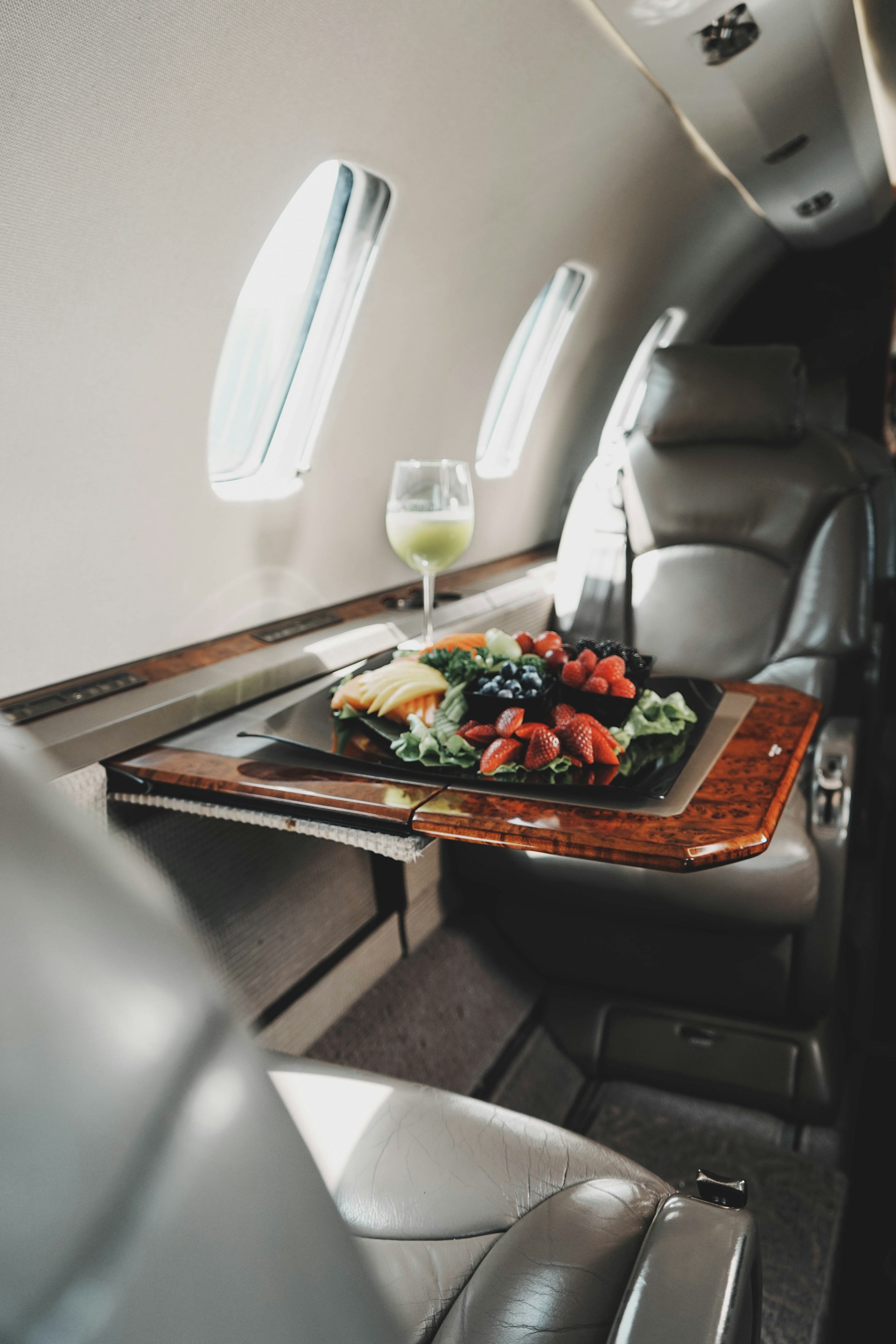
What a Luxury Private Jet Meal Looks Like
There is a common assumption that luxury private jet catering means elaborate, multi-element dishes with dramatic presentation. In reality the best private jet meals tend to look almost understated.
A well executed in-flight meal is clean, balanced, and composed with the environment in mind. A precisely cooked protein, a thoughtfully chosen side, a sauce applied with intention rather than volume. Nothing that is going to shift during taxi or lose its structure before it reaches the passenger. The goal is not to impress with complexity. It is to deliver something that feels genuinely high quality and completely effortless at the same time. That combination is harder to achieve than it looks, and it is what separates experienced private aviation catering from everything else.
Private Jet Meals in a Nutshell
Private jet catering is not really about the food in isolation. It is about the entire experience that surrounds it, and the standard of care that goes into every decision from menu planning through to final presentation.
For passengers it means complete freedom to eat exactly what they want, prepared to a standard that reflects the rest of their travel experience. For operators and crew it means having a catering partner who understands the environment, anticipates the challenges, and delivers without drama regardless of the complexity of the request.